
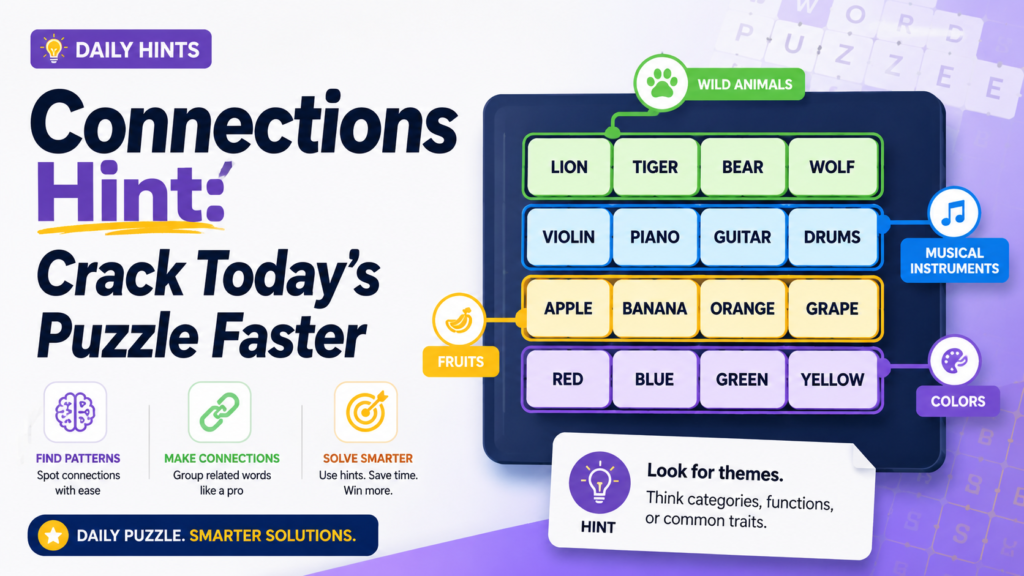
A good connections hint can turn a frustrating puzzle into a fun “aha” moment. You still get the joy of solving it yourself, but you also avoid staring at the same words for twenty minutes with no progress. That balance matters. People enjoy word games because they test memory, logic, pattern recognition, and creative thinking. However, even strong players sometimes need a small push.
That is where a helpful puzzle clue service becomes useful. It gives readers light guidance without ruining the answer. Instead of handing over the solution too early, it supports your thinking step by step. For daily puzzle players, content websites, game blogs, newsletters, and communities, this kind of service can offer real value. It keeps users engaged, helps them learn better strategies, and gives them a reason to return every day.
Why Puzzle Players Look for Helpful Clues
Word puzzles can feel simple at first. You see a group of words, scan for similarities, and try to sort them. Then things get tricky. Some words may have double meanings. Others may belong to more than one possible group. A word that looks obvious can lead you in the wrong direction.
This is why players search for clue-based help. They do not always want a full answer key. Many only want a gentle nudge. A clear clue helps them think in a new way. It may point toward a category, theme, hidden meaning, or word relationship.
Good clue content respects the player’s effort. It does not spoil the game too quickly. Instead, it builds confidence and keeps the puzzle enjoyable.
What Makes a Good Connections Hint Service?
A strong connections hint service gives users layered help. It starts with soft clues, then moves toward stronger guidance only when needed. This approach works because different players need different levels of support.
Some people only need a small category clue. Others may need help spotting a tricky word pair. A few may want the final answer after trying several times. The best service gives all these options in a clean, easy format.
It should also explain the thinking behind the clue. When users understand why certain words fit together, they improve over time. That learning value is what separates a basic answer page from a helpful puzzle guide.
Key Features of a Helpful Puzzle Clue Platform

A useful clue platform should be simple, fast, and easy to follow. Puzzle players usually want help right away. They do not want to scroll through long, messy pages before finding useful guidance.
Clear Daily Clues
Daily clues keep users coming back. A fresh puzzle guide builds routine and trust. Players know they can return each day for support without feeling like the answer has been forced on them.
The daily format also helps websites and publishers. It creates repeat traffic, builds loyal readers, and encourages users to explore related puzzle content.
Spoiler-Safe Layout
Spoilers are one of the biggest problems in puzzle content. Some readers want only a small clue. Others want the final answer. A spoiler-safe structure gives users control.
For example, the page can separate light hints, category clues, stronger hints, and full answers. This lets users stop at the level they prefer.
Simple Language
Puzzle clues should not feel like a dictionary lesson. Clear wording matters. If the clue is harder than the puzzle, it fails.
Simple language helps beginners, casual players, students, and non-native English speakers. It also makes the content more readable on mobile devices.
Strategy Tips
A clue service becomes more valuable when it teaches users how to think. Strategy tips can explain common patterns, such as wordplay, synonyms, pop culture references, sound-alike words, or hidden categories.
Over time, these tips help players solve more puzzles without help.
Mobile-Friendly Reading
Most users search for puzzle help on phones. The content must load fast, use short sections, and avoid clutter. Clean formatting improves the user experience and keeps readers on the page longer.
Benefits for Puzzle Players
Helpful puzzle guidance saves time, reduces frustration, and keeps the game fun. It also helps players learn new ways to think.
When clues are written well, users feel supported instead of defeated. They still get the satisfaction of solving the puzzle. They simply avoid getting stuck for too long.
Puzzle players also benefit from better pattern recognition. They start noticing word groups faster. They learn to question obvious matches. Moreover, they become more comfortable with tricky language.
Here are the main player benefits:
- Less frustration during difficult puzzles
- Better understanding of word relationships
- More confidence while solving daily games
- A fun way to build vocabulary
- A smoother balance between challenge and help
- Better memory and mental flexibility
Benefits for Businesses and Content Websites
A puzzle clue service is not only useful for players. It can also help businesses, publishers, blogs, and digital platforms grow.
Daily puzzle content has strong return value. Users often come back every morning or evening. That habit can build steady traffic and improve audience loyalty.
For content websites, puzzle guides can support a wider entertainment or lifestyle section. They can also increase time on site because readers may explore older puzzles, strategy guides, FAQs, and related word game articles.
In addition, puzzle content can attract a broad audience. Students, professionals, parents, teachers, and casual gamers all enjoy quick brain games. This makes the topic flexible for many types of websites.
Why Choose a Professional Clue Writing Service
A professional clue writing service does more than list answers. It understands user intent. It knows when to give a soft hint, when to explain a pattern, and when to reveal the final solution.
This matters because puzzle readers are careful. If a page spoils too much too soon, they may leave. If it gives vague clues, they may not trust it. A strong writer finds the middle ground.
Professional clue content also keeps tone consistent. It feels friendly, patient, and useful. The writing does not sound rushed or copied. It gives the reader a smooth experience from start to finish.
Real-World Value of Puzzle Hint Content
Puzzle content may look simple, but it can create strong real-world value. For readers, it supports daily learning and mental exercise. For websites, it builds repeat visits. For brands, it creates a friendly connection with the audience.
People enjoy content that fits into their routine. A daily puzzle guide does exactly that. It becomes part of breakfast, a work break, a commute, or a relaxed evening.
Moreover, clue-based content can support community engagement. Readers may share results, discuss tricky categories, or compare solving methods. This makes the content more interactive and memorable.
How Good Clues Improve the User Experience
User experience is not only about design. It is also about how the content makes people feel. A good clue page should feel helpful, not overwhelming.
The best pages guide users in layers. They keep answers hidden until needed. They use clear headings. They explain difficult connections. In addition, they avoid long filler sections that slow the reader down.
A smooth user experience can turn a one-time visitor into a regular reader. That is the real goal.
Common Types of Puzzle Clues
Different clues serve different purposes. A strong guide may use several clue types depending on the puzzle difficulty.
Category Clues
These clues point toward the theme of a group. They do not reveal the exact answer, but they help users think in the right direction.
For example, a category clue may suggest food terms, movie titles, sports words, or common phrases.
Word Meaning Clues
Some puzzles use words with double meanings. A word meaning clue helps users look beyond the most obvious definition.
This is useful when a word belongs to a category in a surprising way.
Difficulty-Based Clues
Some guides divide help into easy, medium, and strong clues. This gives readers more control. They can start small and only reveal more if needed.
Final Answer Support
Some users eventually want the full answer. A complete guide should include it clearly, but only after enough warning. This protects users who still want to solve the puzzle on their own.
How Businesses Can Use Puzzle Content Strategically
Puzzle content can support different business goals. A media website can use it to grow daily traffic. A newsletter can use it to increase open rates. A learning platform can use it to teach vocabulary and critical thinking.
A brand can also use puzzle-style content for engagement. For example, a company can create weekly word challenges related to its niche. This adds personality and keeps the audience involved.
However, consistency is important. One good clue article is helpful, but a steady content plan performs better. Daily or weekly publishing builds habit. It also gives search engines more useful pages to understand.
Related Terms That Fit Naturally
A strong article can include many related phrases without sounding forced. These may include word puzzle, daily word game, puzzle clue, answer support, solving tips, category hint, logic challenge, brain game, hidden theme, tricky words, word association, clue guide, spoiler-free help, puzzle answer, daily challenge, vocabulary builder, pattern recognition, mental workout, game strategy, quick clue, crossword-style thinking, language puzzle, word group, mystery category, smart clue, user engagement, content strategy, search intent, reader retention, mobile-friendly content, helpful guide, entertainment website, digital publisher, puzzle community, daily traffic, loyal audience, educational content, and interactive content.
These terms support the main topic while keeping the writing natural.
How to Make Puzzle Guides Feel Human
Human writing has rhythm. It gives examples. It sounds like someone is guiding the reader, not pushing information at them.
A good puzzle guide should feel calm and friendly. It should understand that readers may be stuck. It should not make them feel silly for needing help.
Small touches make a big difference. Phrases like “look for a shared meaning” or “try reading the word in a different way” feel more useful than a dry answer list.
Mistakes to Avoid
Poor clue content can hurt trust. Readers may leave quickly if the page feels messy, thin, or stuffed with keywords.
Avoid these common mistakes:
- Revealing answers too early
- Using unclear or overly clever hints
- Repeating the same phrase too many times
- Adding long filler before the useful clue
- Ignoring mobile readability
- Forgetting to explain tricky answers
- Mixing outdated clues with current puzzles
- Making the tone too robotic
A helpful guide respects the reader’s time.
Final Thoughts
A thoughtful connections hint gives people the best of both worlds. It protects the fun of solving while offering enough support to keep frustration away. For players, it makes daily puzzles more enjoyable. For websites and businesses, it can build loyal traffic, stronger engagement, and a useful content experience.
The key is balance. Give readers clear clues, simple explanations, and spoiler-safe choices. When puzzle help feels friendly and well-structured, users trust it and return for more. Explore this type of content, refine your clue style, and create a guide that helps people solve smarter every day.
FAQs
What is a connections hint?
A connections hint is a clue that helps players find word groups without giving away the full answer too quickly. It usually points toward a category, shared meaning, or hidden pattern.
Why do people use puzzle clues?
People use puzzle clues when they feel stuck but still want to solve the game themselves. A good clue gives direction while keeping the challenge alive.
Should a clue page show answers right away?
No, not usually. A better format starts with light clues, then stronger hints, and finally the full answer. This protects readers who want spoiler-free help.
Can puzzle hint content help a website grow?
Yes. Daily puzzle content can bring repeat visitors, improve engagement, and support a loyal audience. It works well for entertainment blogs, game websites, and newsletter brands.
What makes a clue service trustworthy?
A trustworthy clue service is accurate, clear, spoiler-safe, and easy to read. It should help users understand the puzzle instead of only giving answers.
For more updates visit: Wordle Hints Today