
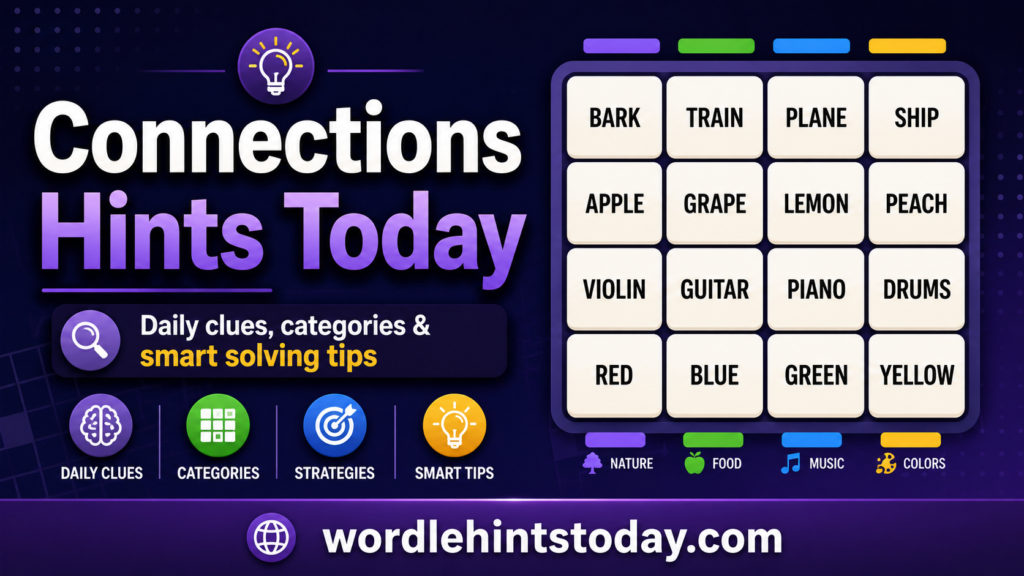
Searching for connections forbes hints today usually means one thing: you want help with the daily Connections puzzle without ruining the fun too early. Maybe one group feels obvious, but the last four words look like they came from a secret language. Maybe you are one guess away from losing your streak. Or maybe you simply enjoy seeing how smart clue writers break down a tricky puzzle.
That is where a helpful daily hints guide becomes valuable. It gives you a gentle push, not a full shortcut right away. The best guides do not just throw answers at you. They help you think better, spot patterns faster, and understand why certain words belong together.
Connections has become a daily habit for puzzle lovers because it feels simple at first. You see 16 words. You group them into four sets. Easy, right? Not always. Some categories are direct, such as foods, colors, animals, or sports terms. Others hide behind wordplay, pop culture, phrases, homophones, or clever double meanings.
This guide explains how daily Connections hints work, why Forbes-style clue pages are popular, what features readers expect, and how puzzle content can bring real value for gaming blogs, entertainment websites, and businesses in the casual gaming space.
What Is the Connections Puzzle?
Connections is a daily word puzzle where players study a grid of 16 words and sort them into four groups of four. Each group shares a hidden connection. The connection may be clear, subtle, funny, or intentionally misleading.
For example, a simple group might include four types of fruit. A harder group might include four words that all come after the same phrase. The challenge is not just knowing words. It is knowing how words behave in different contexts.
That is why the game feels fresh every day. You are not only solving vocabulary. You are solving meaning, culture, memory, and logic at the same time.
The puzzle usually includes color-based difficulty levels:
| Color Group | Common Difficulty | What It Usually Means |
|---|---|---|
| Yellow | Easiest | Clear, direct category |
| Green | Easy to medium | Familiar theme or phrase |
| Blue | Medium to hard | More specific knowledge |
| Purple | Hardest | Wordplay, tricks, or abstract links |
This color system gives players a quick sense of progress. However, the hardest group is not always purple for every person. A movie fan may solve a film category quickly, while someone else may find it impossible.
Why Daily Hint Guides Are So Popular
Daily puzzle guides work because they protect two things at once: your streak and your satisfaction. Most players do not want the answer immediately. They want just enough help to keep going.
A good hint guide respects that. It lets readers choose how much help they need. Some people only want a soft clue. Others want category names. Some want the full answer after they have tried everything.
Moreover, these guides fit perfectly into daily routines. People check them during breakfast, between classes, during lunch breaks, or before bed. The content is short, useful, and repeatable. That makes it powerful for publishers and puzzle-focused websites.
Daily hint articles also build trust. When readers know a site gives clear clues without messy spoilers, they return again. Over time, that daily habit becomes a loyal audience.
Connections Forbes Hints Today: What Readers Expect
A strong connections forbes hints today article should feel useful from the first line. Readers are usually in a hurry. They are stuck, slightly annoyed, and hoping for a clean clue that does not spoil everything.
That means the article needs a clear structure. It should start with a spoiler warning, then offer light hints, stronger clues, category names, and finally full answers. This layered format lets every reader stop at the level they prefer.
The best format often looks like this:
- Quick intro with puzzle number or date
- Spoiler-free general tips
- Soft hints for each color group
- Category names
- Full answers
- Explanation of tricky groups
- Strategy tips for tomorrow’s puzzle
This approach works because it gives control to the reader. They can take one hint and return to the puzzle. They do not feel forced into seeing the answer too early.
Key Features of a High-Quality Hint Service
A daily puzzle hint service needs more than fast posting. Speed matters, but quality matters more. Readers come back when the guide is accurate, easy to scan, and written in a friendly voice.
Spoiler Control
Spoiler control is the heart of a good Connections guide. Nobody wants the full answer shown before they are ready. A smart article separates hints from answers with clear warnings and spacing.
This makes the experience more respectful. It also keeps readers engaged for longer because they can move through the content step by step.
Clear Category Clues
Hints should be useful, not confusing. A weak clue feels vague. A strong clue points the reader in the right direction without giving everything away.
For example, instead of saying “think carefully,” a better clue might say, “These words can all appear after the same common term.” That gives direction without removing the challenge.
Simple Puzzle Explanation
Every daily guide should help new players too. Some readers may land on the article after seeing the puzzle for the first time. A short explanation of the rules can keep them from leaving.
This also helps SEO because the article answers beginner questions naturally. Terms like daily puzzle, word groups, category clues, color categories, and answer guide can fit smoothly into the content.
Fast Readability
Puzzle readers want answers quickly. Short paragraphs, clean headings, and simple tables help them find what they need fast.
However, fast does not mean thin. The article should still explain why a group works, especially when the answer is tricky. That extra detail adds real value.
Why Choose This Type of Puzzle Hint Service?
People choose daily hint services because they make puzzle-solving less frustrating. A well-written guide feels like a smart friend sitting beside you. It does not laugh at your wrong guesses. It simply nudges you toward a better path.
For readers, the biggest advantage is confidence. They learn how categories are built. They start noticing word families, repeated phrases, hidden meanings, and misleading traps. Over time, they rely less on answers and more on strategy.
For website owners, the value is also clear. Daily puzzle content can bring repeat visitors. It encourages regular engagement because the topic renews every day. Unlike one-time news stories, daily puzzle pages give audiences a reason to return.
In addition, puzzle guides work well for entertainment blogs, gaming websites, newsletter brands, lifestyle publishers, and casual learning platforms. The audience is broad, active, and loyal.
Benefits for Puzzle Players
A good hints guide does more than protect your streak. It improves the way you think.
First, it trains pattern recognition. You learn to scan for obvious links, then test weaker ideas before making a guess. This helps you avoid wasting mistakes.
Second, it builds vocabulary. Connections often uses everyday words in surprising ways. You may know each word alone, but the puzzle teaches you how words connect through phrases, themes, and culture.
Third, it makes the game more enjoyable. Getting stuck can feel annoying. A small clue can turn frustration into progress.
Here are the biggest player benefits:
- Better puzzle strategy
- Fewer random guesses
- Stronger word association skills
- Improved memory recall
- Less frustration on hard days
- More confidence with purple groups
- A better chance of keeping a daily streak
The real value is not only solving today’s puzzle. It is becoming a sharper solver tomorrow.
Benefits for Businesses and Publishers
Puzzle content may look simple, but it can support a serious content strategy. Daily games attract readers who return often. That repeat behavior is valuable for websites that depend on traffic, engagement, and loyal audiences.
A business can use puzzle-based content to build a friendly brand voice. It feels lighter than traditional marketing. It gives visitors something useful before asking for anything in return.
For publishers, daily hint pages can support:
| Business Goal | How Puzzle Content Helps |
| Repeat traffic | New puzzle content appears daily |
| Reader loyalty | Users return for hints and answers |
| Search visibility | Daily keywords match active searches |
| Engagement | Readers scroll through clue levels |
| Newsletter growth | Puzzle fans like daily updates |
| Brand trust | Accurate hints build credibility |
In addition, puzzle content can support related topics like brain training, word games, productivity breaks, family games, classroom activities, and casual learning.
That makes it more flexible than it first appears.
How to Use Hints Without Spoiling the Game
The best way to use hints is slowly. Do not jump straight to the answers unless you are completely done trying. Start with the softest clue and return to the puzzle.
A simple method works well:
- Read only one general clue.
- Look again at the 16 words.
- Remove any group you feel confident about.
- Check for words with multiple meanings.
- Save the hardest group for last.
- Only read the full answer when needed.
This keeps the puzzle fun. It also helps your brain do the real work.
A common mistake is grouping words too quickly because they “kind of” fit. Connections often includes trap words. Four words may seem related, but one may belong somewhere else. When that happens, slow down and test the category title in your head.
Ask yourself: “Could all four words share the same exact theme?” If the answer feels loose, wait.
Common Mistakes Players Make
Even experienced players fall into the same traps. The puzzle is designed to make you second-guess yourself.
One mistake is choosing the first obvious pattern. For example, you may see three food words and assume the fourth food-looking word belongs with them. However, the puzzle may be using those words in a different way.
Another mistake is ignoring phrases. Many hard categories depend on what comes before or after a word. A word may not connect by meaning. It may connect because it completes a common phrase.
Players also forget to look for grammar patterns. Sometimes the answer may involve verbs, adjectives, titles, abbreviations, or slang. If meaning does not work, form might.
Here are useful checks before submitting a group:
- Do these four words share one clear category?
- Is one word weaker than the other three?
- Could these words complete the same phrase?
- Are there hidden meanings or pop culture references?
- Am I guessing because I am stuck?
- Have I considered the color difficulty?
These questions can save a mistake at the perfect moment.
What Makes Forbes-Style Puzzle Coverage Work?
Forbes-style daily puzzle coverage often works because it mixes speed, structure, and personality. Readers want the answer, but they also enjoy commentary. A short human note can make the guide feel less mechanical.
That human voice matters. Puzzle players like knowing whether a clue was tricky, funny, unfair, or clever. It gives the article character.
A strong guide may include lines like:
- “This group looks simple, but one word is a trap.”
- “The purple category depends on phrase endings.”
- “If you solved blue first, you probably know this theme well.”
- “Today’s puzzle is easier than yesterday’s, but the final group may slow you down.”
These small comments make the content feel alive. They also help readers understand the puzzle, not just copy the solution.
SEO Value of Daily Puzzle Content
Daily puzzle keywords are powerful because they match active search behavior. People do not search these terms casually. They search because they need help right now.
That gives puzzle content strong intent. A reader searching for connections forbes hints today is usually ready to click, read, and act. They want quick help, not a long sales pitch.
However, SEO success depends on quality. Thin pages with only answers may not satisfy readers. A better article includes hints, explanations, strategy, and a clean reading experience.
Useful related terms can include NYT Connections, daily word game, puzzle answers, puzzle clues, category hints, word association, logic puzzle, brain teaser, puzzle strategy, answer key, clue guide, spoiler warning, yellow group, green group, blue group, purple group, and daily game help.
When used naturally, these terms help search engines understand the page without stuffing the main keyword.
How Businesses Can Turn Puzzle Traffic Into Real Value
A business should not treat puzzle traffic as random clicks. It should treat it as a daily relationship.
If your website publishes puzzle hints, you can invite readers to explore related content. For example, you might offer word game tips, brain training guides, vocabulary articles, printable puzzles, newsletter updates, or educational resources.
The key is to stay relevant. A puzzle reader probably does not want a hard sales pitch. However, they may enjoy tools that improve their solving routine.
A strong puzzle content funnel may include:
- Daily hints page
- Weekly puzzle strategy recap
- Beginner guide to Connections
- Word association tips
- Newsletter for daily clues
- Printable word puzzle worksheets
- Archive of past puzzle explanations
This creates a natural path from one daily visit to long-term audience growth.
Writing Tips for a Better Daily Hint Article
If you are creating your own hint guide, keep the reader’s mood in mind. They may be curious, rushed, or frustrated. Your job is to make the page easy and pleasant.
Use a warm tone. Avoid sounding like a machine. Add small observations, but do not waste time. Puzzle readers appreciate personality, as long as it does not block the answer.
A good article should include:
- A clear spoiler warning
- Short clue sections
- Simple language
- Accurate category labels
- Final answers placed lower on the page
- Brief explanation of the hardest group
- A useful solving tip for next time
Most importantly, update the article daily. Old puzzle pages lose value fast when the searcher wants today’s help.
Reader Experience Matters More Than Tricks
SEO may bring someone to the page, but reader experience brings them back. A clean hint guide should load fast, look organized, and avoid clutter.
Readers should not struggle to find the clue level they want. They should not be forced to scroll through unrelated content before seeing help. They also should not see the full answer by accident.
Good formatting builds trust. Clear headings, tables, and spoiler spacing can make a simple article feel professional.
In addition, the writing should sound natural. A puzzle guide is not a legal document. It should feel friendly, direct, and helpful.
Final Thoughts
The appeal of connections forbes hints today is simple: people want smart help without losing the joy of solving. A strong daily guide gives readers the right clue at the right time. It protects the challenge, supports the streak, and teaches better puzzle thinking.
For players, these guides make hard puzzles more enjoyable. For publishers and businesses, they create a daily content opportunity with loyal search demand. The real win comes from clear structure, spoiler control, accurate clues, and a human voice that feels useful instead of robotic.
If you are building puzzle content, focus on trust first. Give readers clean hints, helpful explanations, and a reason to return tomorrow. That is how a simple daily guide becomes a valuable content service.
FAQs
What does connections forbes hints today mean?
The phrase usually refers to daily clue and answer guides for the NYT Connections puzzle, often written in a Forbes-style format with hints, categories, and final solutions.
Are Connections hints better than full answers?
Yes, hints are better if you still want to solve the puzzle yourself. They give direction without removing the challenge. Full answers are best when you are completely stuck.
How many mistakes can you make in Connections?
Players usually have a limited number of wrong guesses before the puzzle ends. That is why careful thinking matters before submitting a group.
Why is the purple group often so hard?
The purple group often uses wordplay, phrase patterns, hidden meanings, or abstract connections. It may not depend on simple definitions.
Can daily puzzle content help a website grow?
Yes. Daily puzzle guides can bring repeat visitors, improve engagement, and build a loyal audience when the content is accurate, helpful, and easy to use.
For more updates visit: Wordle Hints Today